
What are the forging methods for valve ball blanks?
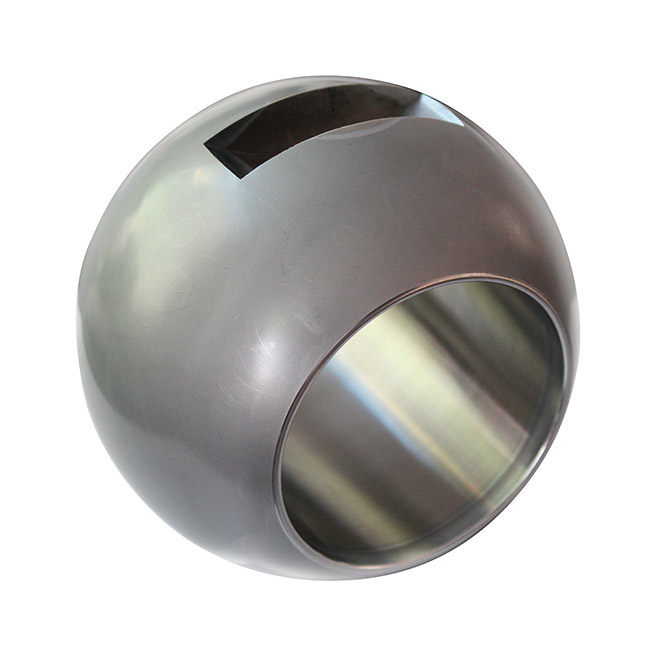
Valve ball is used to control the fluid flow state in fluid transmission pipelines. Due to its simple structure, easy installation and maintenance, good sealing performance, no internal leakage, and small size, valve ball is highly favored by market users. What are the specific forging methods for different valve ball blanks?
1. According to the temperature during forging of the spherical blank:
(1) Hot forging: Heating the billet to a certain temperature before forging is called hot forging.
(2) Cold forging: Forging the billet at room temperature is called cold forging. The forging equipment required for cold forging has a large tonnage. Cold forging can obtain forgings with high precision, strength, and a smoother surface.
(3) Warm forging: The heating temperature of the billet is lower than the temperature during hot forging. It requires smaller equipment tonnage compared to cold forging, and can forge forgings with higher strength and rougher surface. It is a new process currently under development.
2. Divided by the force exerted on the spherical blank
(1) Hand forging processing: relying on the manual strike of hand forging tool box, forging the blank into a predetermined shape on the anvil.
(2) Machine forging: Using forging tools to make forgings from raw materials on various forging equipment. Machine forging can be divided into four categories based on the equipment and tools used: free forging, model forging, membrane forging, and special forging
① Free forging: It is the process of forging a metal billet heated to a certain temperature between the upper and lower anvils of a free forging equipment, and the operator controls the deformation of the metal to obtain the desired shape of the forging.
② Model forging: abbreviated as die forging. It is a production method that places a metal billet heated to a certain temperature into a mold cavity fixed on a forging equipment for forging and restricting its deformation, in order to obtain forgings that are consistent with the mold cavity.
③ Membrane forging: abbreviated as membrane forging. It is a deformation method between free forging and die forging, which involves heating a metal billet to a certain temperature and using free forging to obtain a formed forging through a membrane that is not fixed to the free forging equipment.
④ Special forging: It is a forging process that shapes metal billets on specialized equipment or in special molds. Such as precision forging, roll forging and rolling, ring rolling, spiral oblique rolling, transverse rolling, extrusion forming, etc.