
Stainless steel sphere customization
Production of 316L stainless steel balls, 304HCT stainless steel balls, copper balls, stainless steel hollow balls, stainless steel polished balls, stainless steel flying saucer balls, plastic balls, alloy balls, carbon steel balls, glass balls, aluminum balls, titanium balls, stainless steel bottle balls, plastic bottle balls, electroplated balls, high-precision sealing steel balls of various grades such as 440C 420C Cr15. The raw materials are sourced from high-quality domestic manufacturers such as Yongxing Special Steel, Baosteel, Dalian Special Steel, and Great Wall Special Steel. The steel ball specifications are between 0.5mm-60mm and grade G10-1000. Non standard stainless steel balls can be customized. Foshan 304HCT stainless steel balls can be customized. At the same time, it produces high, medium and low carbon steel, bearing steel, drilling balls, which are widely used in cosmetics, metering pumps, aerospace industry, automobile industry, spray, stainless steel bearings, handicrafts, therapeutic equipment, motorcycles, bicycles and other supporting products. The standard specifies the size of steel balls, Foshan 304HCT stainless steel ball customization, technical requirements, marking, measurement and inspection methods, inspection rules, packaging and storage. The standard applies to steel balls for rolling bearings and commercial carbon chromium bearing steel balls. 316 stainless steel has significantly improved corrosion resistance and high-temperature strength due to the addition of Mo element. Its high-temperature resistance can reach 1200-1300 degrees, and it can be used under harsh conditions. Stainless steel 316 is mainly used for pulp and paper equipment, heat exchangers, dyeing equipment, film washing equipment, pipelines, and external materials for buildings in coastal areas. In 2013, it was also applied in the field of solenoid valves, mainly used for shells, clamps, spheres, valve bodies, valve seats, nuts, valve stems, etc. Stainless steel is generally divided into martensitic stainless steel, ferritic stainless steel, austenitic stainless steel, duplex stainless steel, and deposition hardening stainless steel, or into two categories: chromium stainless steel and nickel stainless steel. 316 stainless steel has outstanding welding capabilities. All standard welding methods can be used for welding. During welding, 316Cb, 316L, or 309Cb stainless steel filler rods or welding rods can be selected according to their usage. To achieve optimal corrosion resistance, the welding section of 316 stainless steel requires post weld annealing treatment. If 316L stainless steel is used, there is no need for post weld annealing treatment
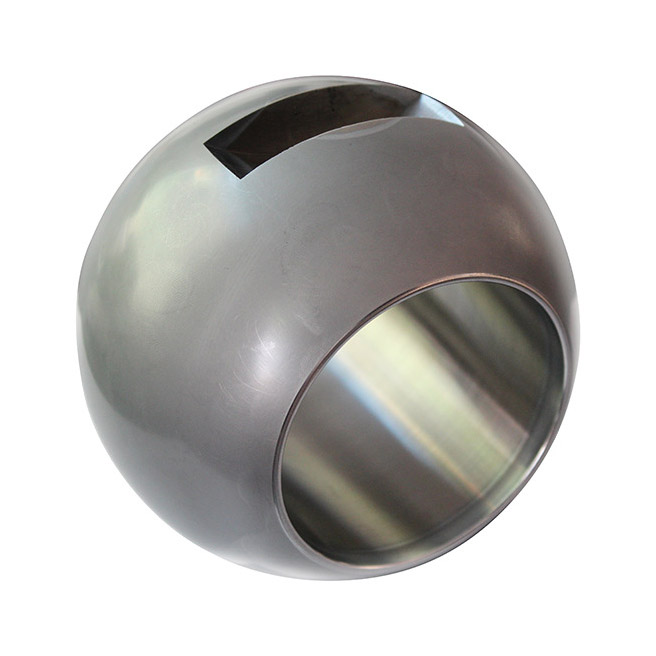
1、 ① Product name and type of stainless steel pneumatic ball valve ② Diameter of stainless steel pneumatic ball valve ③ Does the stainless steel pneumatic ball valve come with accessories so that we can select the correct one for you. 2、 If the planning unit has already selected the type of stainless steel pneumatic ball valve for Sanjing Company, please order directly from our sales department according to the type of stainless steel pneumatic ball valve. 3、 When the usage situation is very important or the environment is complex, please provide planning drawings and specific parameters as much as possible, and our three precision valve experts will review and control them for you. Widely used in baby strollers, guitars, treadmills, mechanical equipment, luggage, mainly producing 316L stainless steel balls, 304HCT stainless steel balls, copper balls, stainless steel hollow balls, stainless steel polishing balls, stainless steel flying saucer balls, plastic balls, alloy balls, carbon steel balls, glass balls, aluminum balls, titanium balls, stainless steel bottle balls, plastic bottle balls, electroplated balls, high-precision sealing steel balls of various grades such as 440C 420C Cr15. The raw materials are sourced from high-quality domestic manufacturers such as Yongxing Special Steel, Baosteel, Dalian Special Steel, and Great Wall Special Steel.
① Completely annealed. Used to refine the coarse overheated structure of medium and low carbon steel with poor mechanical properties after casting, forging, and welding. Heat the workpiece to 30-50 ℃ above the temperature at which all ferrite transforms into austenite, hold for a period of time, and then slowly cool with the furnace. During the cooling process, austenite undergoes another transformation, which can make the structure of the steel finer.
② Spheroidal annealing. The higher hardness of tool steel and bearing steel after forging is reduced. Heat the workpiece to 20-40 ℃ above the temperature at which austenite is formed at the beginning of the steel. After insulation, slowly cool it down. During the cooling process, the lamellar carbides in the pearlite become spherical, thereby reducing the hardness.
③ Isothermal annealing. Reduce the high hardness of certain alloy structural steels with high nickel and chromium content for cutting processing. Generally, the austenite is cooled at a relatively fast rate to the most unstable temperature of the austenite, and when the insulation is appropriate, the austenite transforms into martensite or martensite, and the hardness can decrease.
④ Recrystallized annealing. Used to eliminate the hardening phenomenon (increased hardness and decreased plasticity) of metal wires and sheets during cold drawing and cold rolling processes. The heating temperature is generally 50-150 ℃ below the temperature at which the steel begins to form austenite, in order to eliminate the work hardening effect and soften the metal.
⑤ Graphitic annealing. Used to transform cast iron containing a large amount of carbides into malleable cast iron with excellent plasticity. The process operation is to heat the casting to around 950 ℃, keep it warm for a certain period of time, and then cool it appropriately to differentiate the cementite into clustered graphite.
The difference between the two is as follows:
1. The molybdenum content in 316L stainless steel is slightly higher than that in 316 stainless steel.
2. The upper limit of C content for 316 is 0.08%, while the upper limit of C content for 316L is 0.03%. The higher the C content, the easier it is to induce intergranular corrosion.
3. The lower limits of tensile and flexural strength for 16 are 515 and 205 MPa, respectively, while the lower limits of tensile and flexural strength for 316L are 485 and 170 MPa, respectively.
4. Heat resistance. It is best not to use 316 stainless steel continuously in the temperature range of 800-1575 degrees, but when using 316 stainless steel continuously outside of this temperature range, it has excellent heat resistance. 316L stainless steel has better resistance to carbide precipitation than 316 stainless steel.
5. Heat treatment. Annealing is carried out within the temperature range of 1850-2050 degrees, followed by rapid annealing and rapid cooling. 316 stainless steel cannot be hardened by heat treatment.
6. Welding. 316 stainless steel has outstanding welding capabilities and can be welded using all standardized welding methods. To achieve optimal corrosion resistance, the welding section of 316 stainless steel requires post weld annealing treatment. If 316L stainless steel is used, there is no need for post weld annealing treatment.