What is the classification of valve spheres based on?
1. Floating ball valve
The ball of a ball valve is floating, and under the pressure of the medium, the ball can produce a certain displacement and press tightly against the sealing surface at the outlet end, ensuring the sealing of the outlet end.
The structure of a floating ball valve is simple, and the valve ball has good sealing performance. However, the ball bears all the load of the working medium and is transmitted to the outlet sealing ring. Therefore, it is necessary to consider whether the sealing ring material can withstand the working load of the ball medium. When subjected to high pressure impact, the ball may deviate. This structure is generally used for medium and low pressure ball valves.
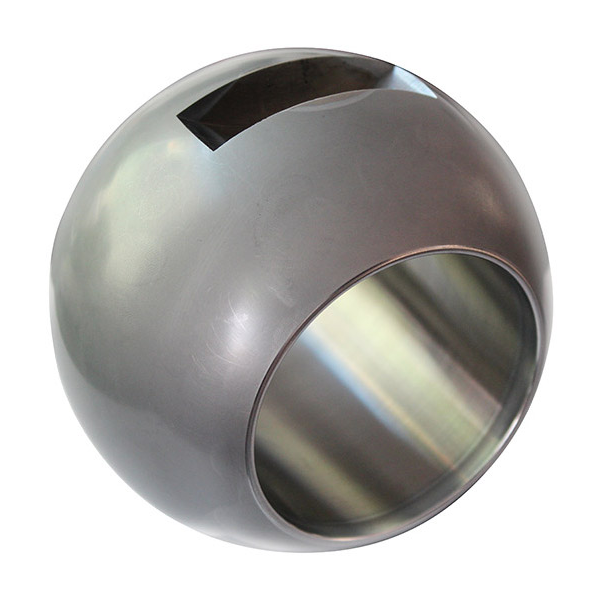
2. Fixed ball valve
The ball of a ball valve is fixed and does not move when compressed. Fixed ball valves are equipped with floating seats, which move when subjected to medium pressure, causing the sealing ring to press tightly against the ball to ensure sealing. Usually, bearings are installed on the upper and lower shafts of the sphere, with a small operating torque, suitable for high-pressure and large-diameter valves.
In order to reduce the operating torque of ball valves and increase the reliability of sealing, oil sealed ball valves have emerged in recent years. They inject special lubricating oil between the sealing surfaces to form an oil film. The valve ball not only enhances the sealing performance but also reduces the operating torque, making it more suitable for high-pressure large diameter ball valves.
3. Elastic ball valve (i.e. track ball valve)
The ball of a ball valve is elastic. The valve ball and valve seat sealing ring are both made of metal materials, with a high sealing pressure ratio. Relying on the pressure of the medium itself cannot meet the sealing requirements, and external force must be applied. This type of valve is suitable for high temperature and high pressure media.
An elastic sphere is obtained by creating an elastic groove at the lower end of its inner wall. When closing the channel, use the wedge-shaped head of the valve stem to expand the ball and press it against the valve seat to achieve sealing. Before rotating the valve ball, loosen the wedge-shaped head, and the ball will return to its original shape, creating a small gap between the ball and the valve seat, which can reduce friction and operating torque on the sealing surface.