
How to reduce the resistance of pipeline system with stainless steel ball valve
There are two ways to reduce the resistance of pipeline systems: one is to reduce the fluid flow rate, which requires increasing the pipe diameter and valve diameter. This often has adverse effects on the economy of pipeline systems, especially for low-temperature transportation systems (liquid hydrogen).
(1) Reduce the local resistance of the valve.
(2) The stainless steel ball valve has a quick and convenient opening and closing switch.
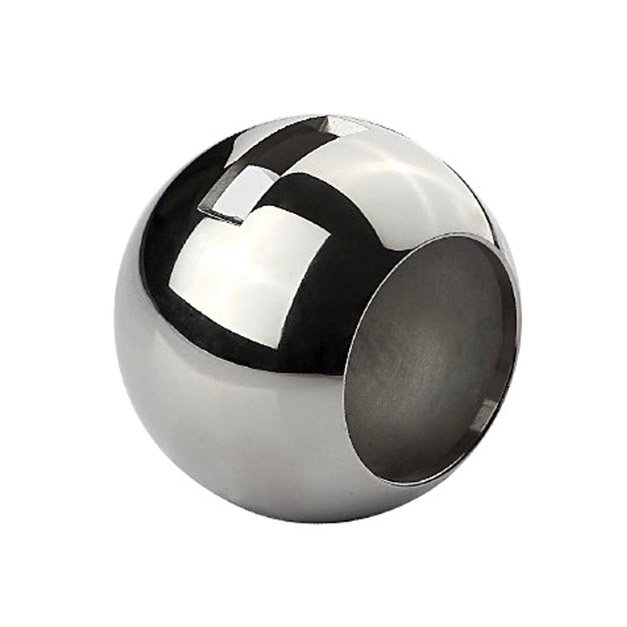
Due to the fact that ball valves generally only require a 90 ° rotation of the handle to complete the fully open or fully closed action, it is easy to achieve rapid opening and closing. It can achieve fast opening and closing, with some structures having an opening and closing time of only 0.05-0.1s, to ensure its use in the automation system of the test bench. When quickly opening and closing the valve, there is no impact during operation.
(3) Stainless steel ball valves have good sealing performance.
The majority of ball valve seats are made of elastic materials such as polytetrafluoroethylene, and a sealing pair composed of metal and non-metal materials is commonly referred to as a soft seal. Generally speaking, the sealing performance of soft seals is easy to ensure, and the requirements for the machining accuracy and surface roughness of the sealing surface are not very high.
(4) Stainless steel ball valves have a long service life.
Due to the excellent self-lubricating properties of polytetrafluoroethylene, there is minimal friction and wear with the ball. Additionally, with the improvement of the ball processing technology, the roughness has been reduced, thereby increasing the service life of the ball valve.